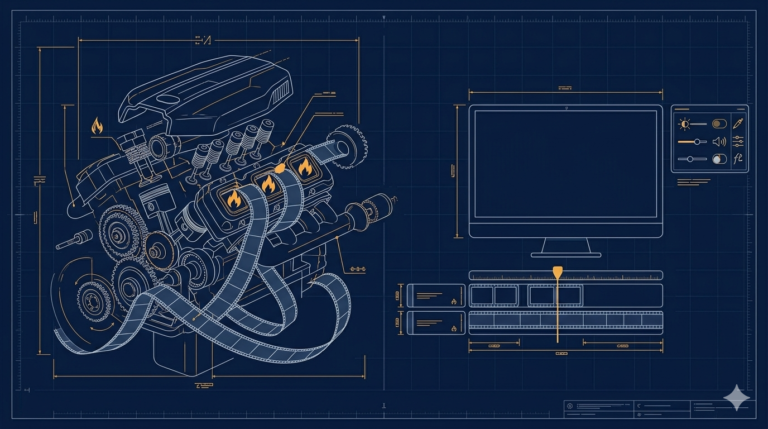
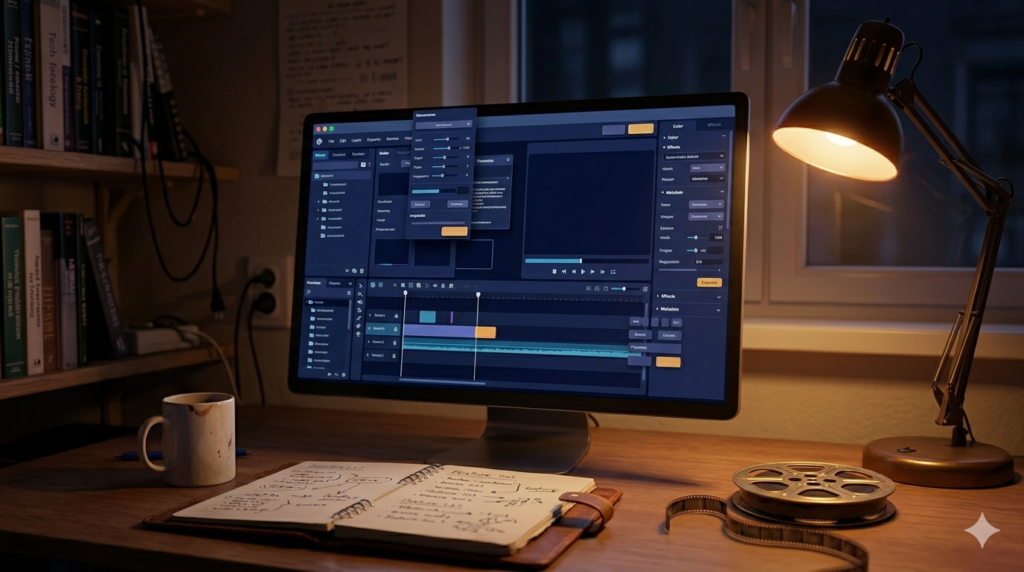
Everyone says start small. My first real project was not small at all. It was a desktop tool to turn long movies into short recap clips, and I built it in Python with Tkinter for the window and FFmpeg for the video work. It worked, eventually, but the first version was a mess, and the mess itself taught me the most useful lesson of the whole project.
The core was a single class that held the whole application, the window, the settings, and the processing. Here is roughly how it opened:
import tkinter as tk
from tkinter import ttk, filedialog, messagebox
from pathlib import Path

class VideoProcessingApp:
    def __init__(self, root):
        self.root = root
        self.root.title("Video Processing Tool")
        self.root.geometry("750x750")

        # every option the tool could possibly have, as a Tkinter variable
        self.input_file      = tk.StringVar()
        self.output_dir      = tk.StringVar()
        self.output_format   = tk.StringVar(value="mp4")
        self.resolution      = tk.StringVar(value="1280x720")
        self.aspect_ratio    = tk.StringVar(value="16:9")
        self.bitrate         = tk.StringVar(value="5000k")
        self.max_scene_length = tk.IntVar(value=15)
        self.clip_duration   = tk.IntVar(value=5)
        self.clip_position   = tk.StringVar(value="middle")
        self.detection_method = tk.StringVar(value="content")
        self.scene_threshold = tk.DoubleVar(value=0.3)
        self.keep_original   = tk.BooleanVar(value=False)

        self.create_widgets()
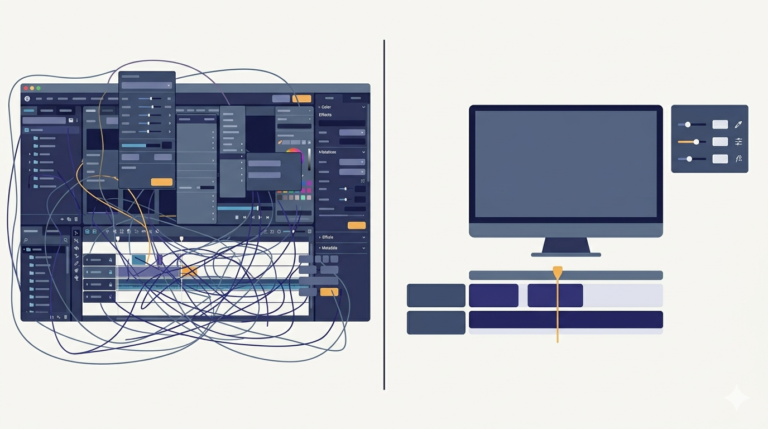
Look at that list of variables. Output format, resolution, aspect ratio, bitrate, maximum scene length, clip duration, clip position, detection method, a scene threshold, and a keep original toggle. Every one of those became a control on the screen. The window was a wall of dropdowns and sliders, because I had confused thorough with good. I thought a tool with more options was a better tool.
It was not. In practice I used three or four of those settings and ignored the rest, but every one of them was still code I had to write, wire up, and keep working. The bitrate field alone had to be validated, passed to FFmpeg, and handled when it was left blank. Multiply that by a dozen settings and most of my effort was going into options nobody, including me, actually touched.
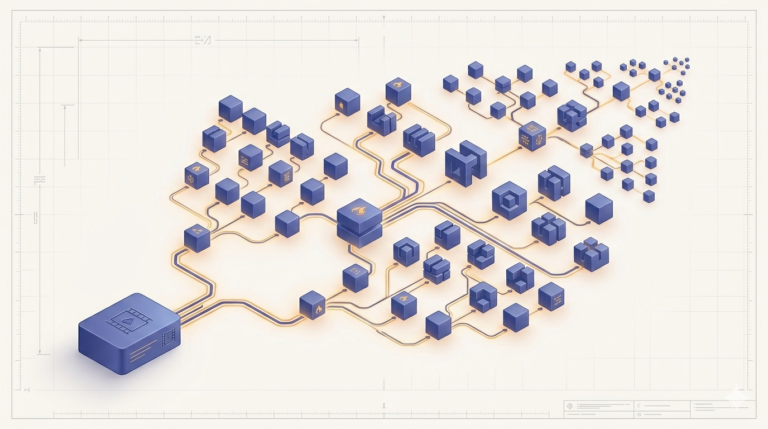
The other early mistake was reaching for a heavy library before I understood the problem. For scene detection I pulled in a separate package, and it worked, but it wrote intermediate files to disk and added a whole dependency I had to install and manage. I will come back to that in the next posts, because tearing it out was one of the best decisions I made.
A few things people ask me about this
Why Python and Tkinter for a video tool? Because Tkinter ships with Python, so there was nothing extra to install for the window, and the heavy lifting was done by FFmpeg through subprocess calls, not by Python itself. Python was the glue, FFmpeg was the engine.
Was having lots of options really a problem? Yes. Each setting is not free. It is a widget to lay out, a variable to read, a value to validate, and a branch in the FFmpeg command to maintain. A screen full of options I never used was pure cost with no return.
Next
The next thing I did was open the tool again a few days later, look at it as a stranger would, and start deleting. Cutting features and a whole dependency out of it is the next post.