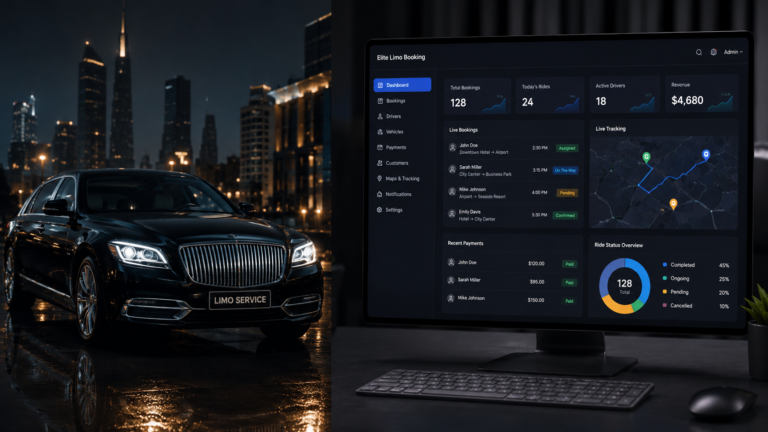
The limo booking plugin was the most ambitious thing I had built, and the most humbling. A complete ride platform as a WordPress plugin, booking, phone verification, card payments, dispatch, tracking, history, chat, safety. This final post is the honest accounting this series promised, what the system became, what each wall taught me, and which columns things truly landed in.
What actually got built
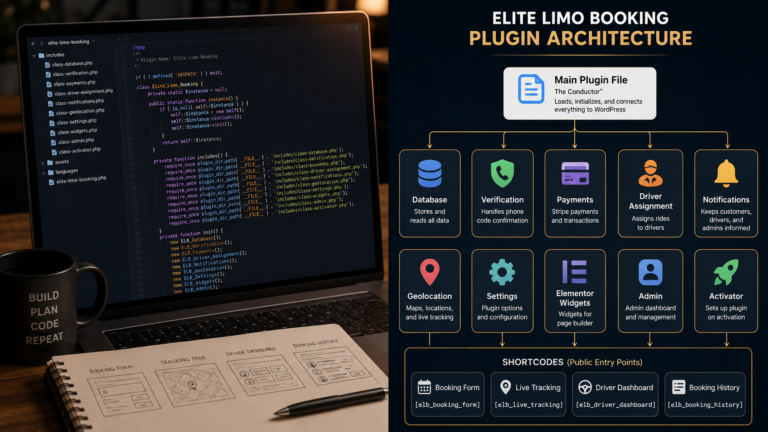
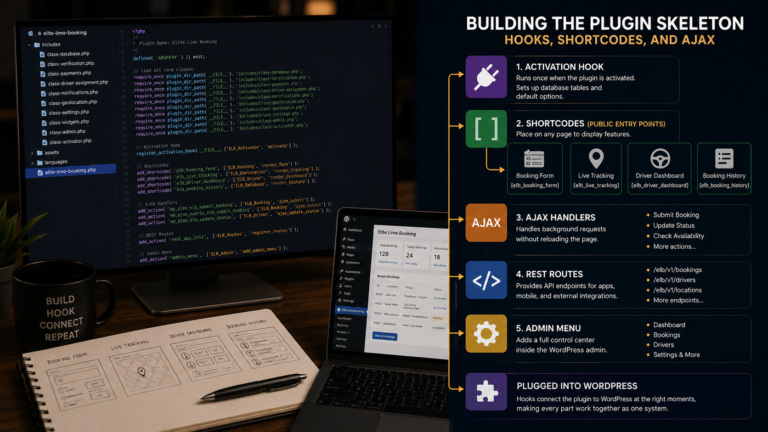
A plugin structured as one class per job, database, OTP, payments, assignment, notifications, loaded by a conductor main file. Four custom tables through wpdb with the site prefix, because bookings are records, not content. Wiring through activation hooks, four shortcodes so the site owner places the features, and one AJAX endpoint routing many operations, every state-changing request verified by nonce. Phone verification with expiring single-use codes checked only on the server. Stripe payments through PaymentIntents, amounts in cents, keys in settings, card numbers never touching my database. A dispatch dashboard with drag-to-assign and five-second polling, a driver dashboard mirroring it. Browser-based GPS tracking that works within a browser’s limits, and I keep saying it that way deliberately. A verified-phone booking history, a manifest and service worker making the site installable, vehicle classes priced in data, a polling chat, and an operator-alert safety button.
The lessons, honestly ranked
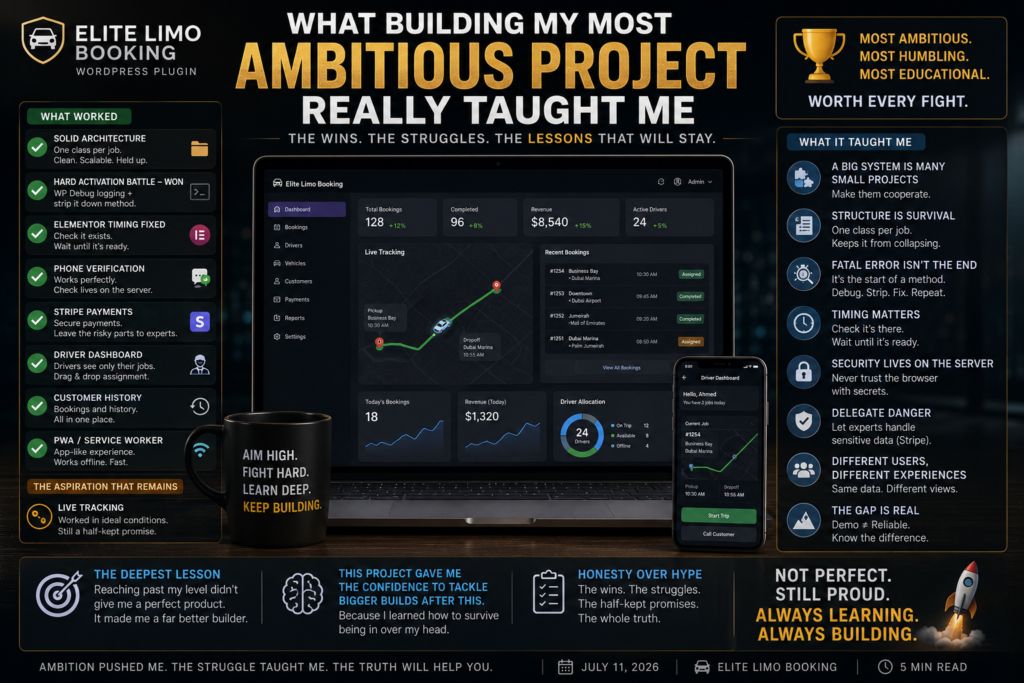
The debugging lessons outrank the feature lessons, and it is not close. WP_DEBUG_LOG and the strip-it-down method converted the project’s darkest wall, installed but dead, into a repeatable procedure, and I have reused that procedure on every WordPress problem since. The timing rule, never touch another plugin’s classes before its loaded hook fires, explained a whole category of crashes beyond Elementor. The security spine, nonces on every AJAX request, prepared statements on every query, verification only on the server, was not one feature but the same three disciplines repeated until they became reflex. And the architecture bet, tables over post meta, one class per job, paid off every single week, bugs had homes, features had files.
The humility lessons matter as much. Live tracking taught me the distance between a demo and a product, and that saying works within browser limits is worth more than claiming an Uber. The two-column list from post one, must work versus reach for it, turned out to be the most important document of the project, because it let me be ambitious and truthful at the same time.
A few things people ask me about this
Was WordPress the right platform for this? For a booking system attached to a business site, yes, the plumbing, users, AJAX, admin, hosting, comes free. For a multi-city ride network, no, that demands native apps and dedicated infrastructure. Knowing which product you are building is the answer.
What would you do differently? Adopt the debug workflow on day one instead of meeting it at the fatal error. And build the payment flow earlier, its discipline, cents, key hygiene, generic error messages, raised the code quality everywhere else.
Is the plugin finished? It is complete as a solo build, honest edges and all. Finished would mean SMS gateway hardening, a native driver app for background tracking, and load testing at fleet scale, the exact points where a solo WordPress build meets its natural borders.
Where this leads
Every project after this one stood on its shoulders. The class-per-job structure, the AJAX security spine, the debug procedure, the habit of two honest columns, all of it became my default kit. The next build took these tools somewhere with even higher human stakes, a marketplace for domestic workers, where the hardest problems were not technical at all. That story is next.